Showing posts with label Dryer. Show all posts

Sunday, January 12, 2020

Orlando Home Fire Cause by Dirty Dryer & Duct

Not Cleaning the Clothes Dryer and Duct is the Major Cause of Orlando Dryer Fires!

Modern home appliances are safer today than they were just a decade ago, but the amount of fires has not decreased. Failure to clean the dryer and ducts accounts for more than 34 percent of the dryer fires in the United States. This is the leading cause of home clothes dryer fires. Other causes include manufacturing defects and poor installation. Foreign manufacturing and foreign component suppliers are another cause. Increasing quality issues are associated with the extremely rapid growth of fires connected with appliances. More home clothes dryer fires occur in the fall and winter months and peak in January. 
You should check your dryers and appliances out for manufacturer defects and recalls at https://www.cpsc.gov/Recalls .

What Type of Dryer is Your Home Designed for?

The dryer manufacturers set limits of the length and type of duct that can be used with their dryers. These limits are based on the type of equipment installed in the dryer. Damp lint requires a certain volume of air to move it through the ducts. Homeowners will often select a dryer and make it fit their house. Some dryers are designed with larger motors and fans to move the lint farther.  Economy or inexpensive dryers often have the smallest motors and fans. All dryers are not created equal.  

Dryer Duct Design and Orientation Limits the Length .

The type of duct material, vent hood, the number of turns the duct and orientation, horizontal or vertical affect the length of the duct.  Below is the dryer manufacturers' requirement based on the model of dryer.
Manufacturer's recommendation for Dryer Vent length and type.

Mechanical fasteners cause lint to accumulate inside the duct and reduce air flow.  Dryer duct inspection in Volusia County.
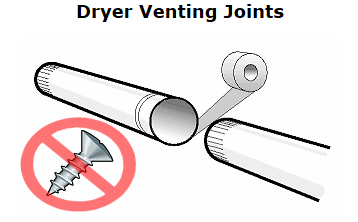
Ducts should have no mechanical fasteners.
The type of material used for the duct is very important in venting lint and moisture. Each 90-degree turn decreases the length of the duct by 5 feet. The use of a flat hood decreases the length by half. Using flexible vent ducts also cuts the length by half.  Rigid metal ducts are required to be taped at the joints and not fastened by screws.  The screw shank protruding into the duct creates and place for lint to accumulate.
Winter Park clogged dryer vent.  Fire Hazard!  Olando Home Inspection, (386) 624-3893
Flexible and vinyl ducts are not allowed
because they collect lint and are a fire hazard!


Homeowners often choose flexible metal or vinyl duct for their ease of installation. These types of ducts are not allowed for use on a dryer in many areas due to the fire hazard. Flexible ducts have many areas for lint to accumulate within the duct. Vinyl and PVC when heated create an electrostatic charge that attracts lint, these are not allowed.  Most municipalities and building codes require rigid metal ducts without mechanical fasteners. These rigid ducts have fewer areas to collect lint and obstruct the airflow.

Fire Hazard!  Gooseneck dryer vents on roof need yearly maintenance.  Longwood Home Inspection, (386) 624-3893
Clogged gooseneck dryer vent on the roof.

Gooseneck dryer vent hoods are common in Deltona and often clogged due to the location on the roof. The homeowners are either unaware of them or just forget about them until they become a problem. Most of these types of vents we inspect are clogged. Many of these types of vent hoods when clogged cause the duct to separate in the attic. Damaged ducts pump moisture and lint into the attic causing moisture damage, wood rot and mold growth. Gooseneck hoods because of their location on the roof should be scheduled for yearly inspection and cleaning by a professional. 

Annual Dryer Duct Inspection and Cleaning

All dryer ducts should be inspected and cleaned yearly. Check with your Home Inspector when you buy your home. A dryer duct inspection may reveal improper installation or materials. If you have a larger family and use the dryer daily or more often, your ducts may require semi-annual cleaning. Less frequent use may only require biennial cleaning.  Protect your family and sleep soundly at night.  Have your ducts inspected and cleaned in the fall when you change your smoke detector batteries. 


Best Orlando Home Inspector, Best Orange County Home Inspector, Best Windermere Home Inspector, Best Lake Butler Home Inspector, Best Ocoee Home Inspector, Best Winter Park Home Inspector
Frank Carr, Florida Licensed Home
Inspector
Frank Carr is the Owner / Inspector at First Choice Home Inspections in Deltona, FL serving Volusia, Seminole, Orange and Lake Counties. Formerly in the building trades, Frank’s focus is a safe home in the Orlando Metro and Daytona Beach areas of Central Florida and building FCHI. We believe that consumers have the right to expect the highest standards of thoroughness, fairness and effectiveness from their home inspector and that is exactly what we provide.
 
First Choice Home Inspections
Residential Home Inspections in Central Florida
(386) 624-3893 


Friday, November 4, 2016

Orlando Fire Hazards from Clogged Dryer Vents


We started blogging about clogged goose neck dryer vents in 2011, today we still see just as many every day in the Orlando area during the home inspection process.  Because they are located on the roof, the homeowner does not see them and they are mostly overlooked until the dryer is not working or worse a fire happens.

As a home inspector, one of the biggest safety hazards I see daily is dryer vents.  Dryer fires are among the top ten reasons for home fires and cause more than 15,000 fires annually.  Dryer exhausting through the roof should duct to a special dryer roof vent without screen.   

The roof vent or louvered plenum must be equivalent to a 4 inch wall termination in regard to resistance to airflow and back-flow prevention, and should require little or no maintenance to prevent clogging.


Home inspection, Orlando, FL, roof inspection, clogged dryer vent, fire hazard, Orange County, Florida, home inspector,
Home built in 2013 goose-neck looks shiny and new.


Home Inspection, Orlando, FL, Orange County, Florida, Home Inspector, dryer vent
2013 home inside of goose-neck vent.

There are many issues with this type of vent.  It must be a vent that has a back-flow prevention flap and it should not have a screen.  Many of the goose-neck type of vents come with screens and are unsuitable for dryer venting.  
home inspection, roof inspection, dryer vent, Orlando, FL, Orange County, Florida
Goose neck vent with a screen


home inspection, Orlando, FL, lake mary, Orange County, Florida, dryer vent, roof inspection, longwood, home inspector,
Totally blocked dryer vent.


roof inspection, home inspection, Orlando, FL, Orange County, Florida, clogged dryer vent,
Inoperable back-draft damper.

home inspection, orlando, fl, orange county, florida, clogged dryer vent, winter springs, home inspector
Goose-neck with screen was clogged.  Improper duct type.
Lint exhausted into attic damaging roof decking.


  1. Dryer ducts must be at least 4 inches in diameter or at least the size of the dryer outlet. The exhaust duct must not extend into or through heating or air-conditioning ducts. The exhaust duct system should be supported and secured by mechanical fasteners. It should be insulated in non-conditioned spaces to prevent condensation.
  2. The maximum length for a clothes dryer exhaust duct should not exceed 25 feet. This length should be decreased by 2.5 feet for every 45-degree bend the duct makes, and 5 feet for every 90-degree bend the duct makes.
  3. The dryer exhaust ducts should be constructed of rigid metal (galvanized steel). The interior of the duct should be smooth surfaced with the joints running in the direction of the airflow. There should be no sheet-metal screws, rivets or any other fastener used to connect the duct joints. Fasteners that penetrate into the airway will catch lint and block airflow. 
  4. Foil duct tape (not plastic or vinyl) should be used to secure joints. Outside termination must be equipped with a back draft damper, which prevents air, moisture and rodents from entering. The termination must not have a screen covering the exhaust outlet.


I have seen all of these used for dryer roof vents.  Just because they are sold at the hardware store does not make them right.

 According to the IRC:
- M1502.3 Duct termination.
- - Exhaust ducts shall terminate on the outside of the building.  Exhaust duct terminations shall be in accordance with the dryer manufacturer’s installation instructions.  If the manufacturer’s instructions do not specify a termination location, the exhaust duct shall terminate not less than 3 feet (914 mm) in any direction from openings into buildings.  Exhaust duct terminations shall be equipped with a back draft damper.  Screens shall not be installed at the duct termination.

types of goose neck vents, home inspection, roof inspection, orlando, fl, orange county, florida, home inspector
In the opinion of this home inspector, the biggest problem I see with the roof vent is out of sight out of mind.  Each year many people die in home fires that start at the dryer.  Prevention is often easy and requires little effort.  Dryer vents should be cleaned annually but in the case of roof top vents I recommend semi-annually.  


licensed home inspector, owner of First Choice Home Inspections, home inspector, Florida, Orlando, Orange County, Longwood, Winter springs
Frank Carr is the Owner / Inspector at First Choice Home Inspections in Deltona, FL. Formerly in the building trades, Frank’s focus is a safe home and building FCHI. We believe that consumers have the right to expect the highest standards of thoroughness, fairness and effectiveness from their home inspector and that is exactly what we provide. Http://1homeinspector.com


First Choice Home Inspections 
(386) 624-3893
Email:  home.inspections@aol.com
Website: 
Http://1homeinspector.com
Facebook:  https://www.facebook.com/FirstChoiceHomeInspectionsLlc

Thursday, June 25, 2015

Dangers of Roof Dryer vents in Orlando


As a home inspector, one of the biggest safety hazards I see daily is dryer vents.  Dryer fires are among the top ten reasons for home fires and cause more than 15,000 fires annually.  Dryer exhausting through the roof should be ducted to a special dryer roof vent without screen.   

The roof vent or louvered plenum must be equivalent to a 4 inch wall termination in regard to resistance to airflow and back-flow prevention, and should require little or no maintenance to prevent clogging.


Home built in 2013 goose-neck looks shiny and new.
2013 home inside of goose-neck vent. 


There are many issues with this type of vent.  It must be a vent that has a back-flow prevention flap and it should not have a screen.  Many of the goose-neck type of vents come with screens and are unsuitable for dryer venting.  
Goose-neck vent with screen


Goose-neck that is totally blocked.

Inoperable back-draft damper.
Goose-neck with screen was clogged.  Improper duct type.  Lint exhausted into attic damaging roof decking.

  1. Dryer ducts must be at least 4 inches in diameter or at least the size of the dryer outlet. The exhaust duct must not extend into or through heating or air-conditioning ducts. The exhaust duct system should be supported and secured by mechanical fasteners. It should be insulated in non-conditioned spaces to prevent condensation.
  2. The maximum length for a clothes dryer exhaust duct should not exceed 25 feet. This length should be decreased by 2.5 feet for every 45-degree bend the duct makes, and 5 feet for every 90-degree bend the duct makes.
  3. The dryer exhaust ducts should be constructed of rigid metal (galvanized steel). The interior of the duct should be smooth surfaced with the joints running in the direction of the airflow. There should be no sheet-metal screws, rivets or any other fastener used to connect the duct joints. Fasteners that penetrate into the airway will catch lint and block airflow. 
  4. Foil duct tape (not plastic or vinyl) should be used to secure joints. Outside termination must be equipped with a back draft damper, which prevents air, moisture and rodents from entering. The termination must not have a screen covering the exhaust outlet.


I have seen all of these used for dryer roof vents.  Just because they are sold at the hardware store does not make them right.

 According to the IRC:
- M1502.3 Duct termination.
- - Exhaust ducts shall terminate on the outside of the building.  Exhaust duct terminations shall be in accordance with the dryer manufacturer’s installation instructions.  If the manufacturer’s instructions do not specify a termination location, the exhaust duct shall terminate not less than 3 feet (914 mm) in any direction from openings into buildings.  Exhaust duct terminations shall be equipped with a back draft damper.  Screens shall not be installed at the duct termination.

In the opinion of this home inspector, the biggest problem I see with the roof vent is out of sight out of mind.  Each year many people die in home fires that start at the dryer.  Prevention is often easy and requires little effort.  Dryer vents should be cleaned annually but in the case of roof top vents I recommend semi-annually.  

Clothes dryers a leading cause of home fires in Orlando


Frank Carr is the Owner / Inspector at First Choice Home Inspections in Deltona, FL. Formerly in the building trades, Frank’s focus is a safe home and building FCHI. We believe that consumers have the right to expect the highest standards of thoroughness, fairness and effectiveness from their home inspector and that is exactly what we provide. Http://1homeinspector.com


First Choice Home Inspections 
(386) 624-3893
Email:  home.inspections@aol.com
Website: 
Http://1homeinspector.com
Facebook:  https://www.facebook.com/FirstChoiceHomeInspectionsLlc